
Introduction:
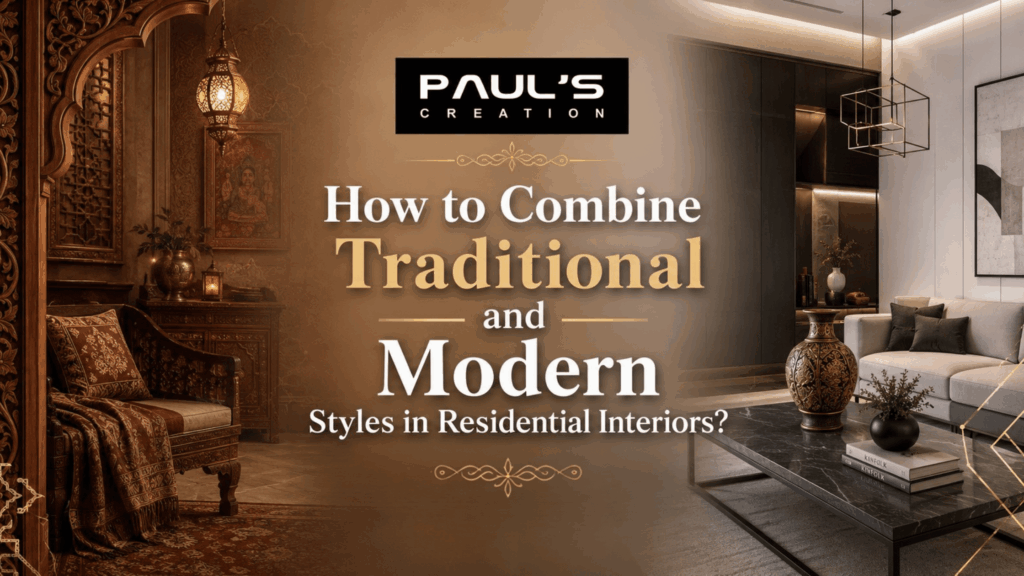
Combining traditional charm with modern design is becoming a popular approach to today’s home. Many homeowners seek spaces that feel rooted in culture while still reflecting their current lifestyles. This balance is where skilled residential interior designers play an important role, as they help shape homes that carry both heritage values and contemporary comfort.
Creating such interiors is not about mixing everything randomly. It is about thoughtful coordination of materials, colors, furniture, and layout so both styles can coexist without conflict.
- Understanding the Core of Both Styles
Before combining styles, it is important to understand what defines each one.
Traditional interiors often include:
- Carved wooden furniture
- Rich fabrics like silk or cotton mixtures
- Detailed patterns and motifs
- Warm, earthy tones
- Handcrafted decor pieces
Modern interiors are known for:
- Clean lines and simple forms
- Neutral color palettes
- Functional furniture
- Open layouts
- Minimal decorative elements
When both are brought together carefully, the result feels balanced, meaningful, and visually interesting. Many interior designers begin by studying how the homeowner lives and what cultural elements they want to preserve.
- Start with a Neutral Base
A neutral foundation helps both styles work together smoothly. Walls painted in soft whites, beige, or light grey create a flexible backdrop.
This approach allows traditional wooden pieces or modern metal accents to stand out without competing visually. Likewise, flooring plays an important role in both styles. Natural stone or polished wood offers a good foundation for both.
Interior designers often recommend neutral bases because it prevents visual confusion and give freedom for styling later.
- Mixing Furniture with Purpose
Furniture selection is one of the most important steps when combining styles.
Instead of filling the space with one style, try this approach:
- Place a traditional wooden sofa set in the living room
- Add a modern glass coffee table
- Use a classic carved dining table with simple modern chairs
- Combining upholstered modern lounge chairs with antique side tables
This creates a layered look where both styles support each other. The key is balance, not competition between pieces.
- Using Cultural Elements as Focal Points
Traditional elements should not be scattered everywhere. Instead, select a few strong focal points such as:
- A carved wooden panel on the main wall
- Brass or copper decor pieces
- Hand-woven rugs or textiles
- Traditional artwork or sculptures
These elements bring identity to a home. When placed thoughtfully, they can stand out beautifully even in a modern setting.
Many interior designers prefer using cultural pieces as focal points rather than background fillers, which helps maintain visual clarity.
- Lighting That Connects Both Styles
Lighting plays a major role in connecting different design styles.
A combination approach works best:
- Modern recessed lighting for general brightness
- Pendant lights with traditional patterns or materials
- Wall sconces with metallic or brass finishes
- Floor lamps with simple modern shapes
This mix allows both design languages to be visible without overpowering each other.
Warm lighting tones are especially effective at bridging traditional textures with modern surfaces.
- Combining Materials Thoughtfully
Material selection can make or break a style combination. A successful mix depends on contrast and harmony.
Examples of effective combinations:
- Wood + glass
- Stone + metal
- Cotton fabrics + leather finishes
- Matte surfaces + polished accents
For instance, a traditional carved wooden cabinet placed beside a sleek metal-framed mirror creates visual interest without looking mismatched.
Skilled residential interior designers often experiment with these contrasts to bring depth to living spaces.
- Keep Color Coordination Balanced
Color plays a unifying role in mixed-style interiors.
A good strategy is:
- Use neutral tones as the main palette
- Add traditional colors like deep red, mustard, or royal blue to small areas
- Introduce modern shades like grey, white, or black for balance
Avoid using too many strong colors in one space. Instead, distribute them carefully across furniture, textiles, and decor items.
This approach helps the home feel connected rather than divided into separate design themes.
- Create a Flow Between Rooms
Consistency across rooms is important when combining traditional and modern styles.
Instead of changing styles completely from one room to another, carry small design elements throughout the home:
- Repeats similar wood finishes
- Maintain a common color thread
- Use matching metal accents
- Keep flooring consistent
This creates a natural flow, making the entire home feel connected. Many interior designers focus on continuity so that each room feels part of the same design story.
- Add Personal and Cultural Touches
A home becomes meaningful when the personal history is reflected in the design.
You can include:
- Family heirloom furniture
- Handmade crafts from different regions
- Travel souvenirs with cultural value
- Personal artwork or photographs
These items bring emotional value while fitting naturally into both traditional and modern environments.
- Avoid Overcrowding Design Elements
While mixing styles, it is important not to overload spaces with too many items. There should be a place and purpose for each piece.
A balanced layout helps:
- Maintain visual comfort
- Highlight important decor pieces
- Keep all movement easy within the room
Simple spacing decisions often make the biggest difference in combined-style interiors.
Conclusion:
Mixing traditional and modern styles is not about choosing one over the other. It is about creating a living space that respects the heritage while integrating current design ideas. This balance can be beautifully achieved within any home with thoughtful planning, material selection, and styling decisions.
Experienced residential interior designers play a key role in achieving this harmony, guiding homeowners to combine both worlds naturally and practically.
A well-balanced interior becomes more than just a visual experience; it is a space that reflects identity, comfort, and everyday living in a meaningful way.