
Introduction:
Luxury interiors are no longer built around rich finishes and decorative appeal. Technology is shaping how spaces are imagined, constructed, and experienced. From automation systems to digital design tools, modern homes are becoming more responsive and lifestyle-focused.
This shift has fundamentally changed the way luxury interior designers plan and execute projects. Design today is not just about appearance but also about how smoothly a space functions in daily life.
- Smart Living is Becoming the Core of Modern Luxury
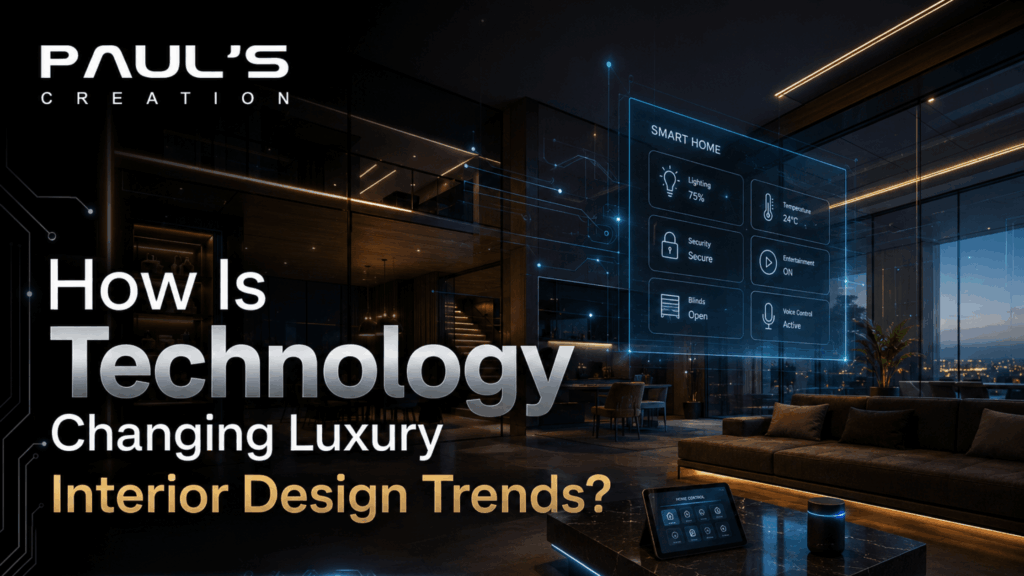
Luxury homes are increasingly built around smart systems that manage lighting, temperature, security, and entertainment. These systems are no longer seen as add-ons but as part of the main structure of the design.
Homeowners can control multiple functions through mobile apps or voice commands. Curtains open at scheduled times, lights adjust automatically based on natural daylight, and security systems operate in the background with minimal effort from the user.
Luxury interior designers now coordinate with technology experts to integrate these systems into walls, ceilings, and furniture so that devices do not interrupt the visual flow of the space.
- AI Tools Change Design Planning
Artificial intelligence is reshaping interior layout development. Instead of manually testing multiple arrangements, designers can use AI tools to generate spatial options quickly.
These systems analyze room size, movement flow, lighting direction, and furniture placement to suggest practical configurations. Clients can also view realistic 3D simulations before construction begins.
This reduces guesswork and speeds up decision-making while allowing more time for creative direction and material selection for luxury interior designers.
- Lighting Systems Are Interactive
Lighting now plays a more active role in shaping interior moods. Smart lighting systems allow users to change brightness, tone, and color based on activity or time of day.
Morning settings may bring brighter white tones, while evening settings can shift to softer shades for relaxation. Some homes also include motion-based lighting that responds automatically when someone enters a room.
Design professionals use programmable lighting scenes to create different living experiences within the same space, making interiors more flexible and functional.
- Voice and Gesture Controls Redefining Interaction
Traditional switches are increasingly being replaced by voice and gesture-based systems. Homeowners can control devices using simple spoken commands or hand movements.
Music, lighting, air conditioning, and security systems can all be managed without physical controls. This makes daily living more fluid and reduces manual adjustment dependency.
Luxury homes are now designed with hidden tech systems so that interaction feels natural without visual distraction from devices.
- Sustainable Technology in Luxury Spaces
Sustainable living has become an important part of high-end living. Technology helps reduce energy consumption while maintaining comfort levels.
Solar energy systems, smart water usage controls, and energy-monitoring devices are now widely used in premium homes. These systems automatically regulate usage based on occupancy and time schedules.
Luxury interior designers are increasingly combining sustainability with modern living requirements, making eco-conscious choices part of high-value design projects.
- Virtual Design Is Transforming the Client Experience
Digital platforms now allow clients to experience interior spaces before they are built. Through virtual reality and 3D visualizations, users can walk through their future homes and suggest changes in real time.
This reduces confusion during execution and allows clear communication between clients and designers. Remote collaboration tools also allow projects to be managed from different locations.
The globalization of interior design has improved client engagement and expanded opportunities for luxury interior designers.
- Smart Furniture Changes Space Usage
Furniture is no longer static. Many modern luxury homes include adaptable pieces that serve multiple purposes. Beds with adjustable settings, sofas with built-in charging ports, and modular seating systems are becoming common.
Rooms can be rearranged based on need. A living area can quickly convert into a workspace or entertainment zone without major effort.
This flexibility is especially useful in urban luxury homes where space optimization is important.
- Digital Control Systems for Entire Homes
Modern luxury interiors often include centralized control systems. These systems manage lighting, appliances, entertainment, and security from one interface.
Homeowners can create schedules for daily routines or activate specific modes like “work mode,” “relax mode,” or “away mode.” Each mode adjusts the environment automatically.
This level of control gives residents more convenience and consistency in their living experience.
Conclusion:
Technology has become a major force in shaping modern luxury interiors. Homes are now more interactive, efficient, and adaptable than ever before. From smart systems to AI-driven design tools, interior planning is evolving.
Luxury interior designers are rethinking how people experience their living spaces, not simply adopting new tools. The future of luxury interiors lies in combining design creativity with intelligent systems that support everyday life.