
Introduction:
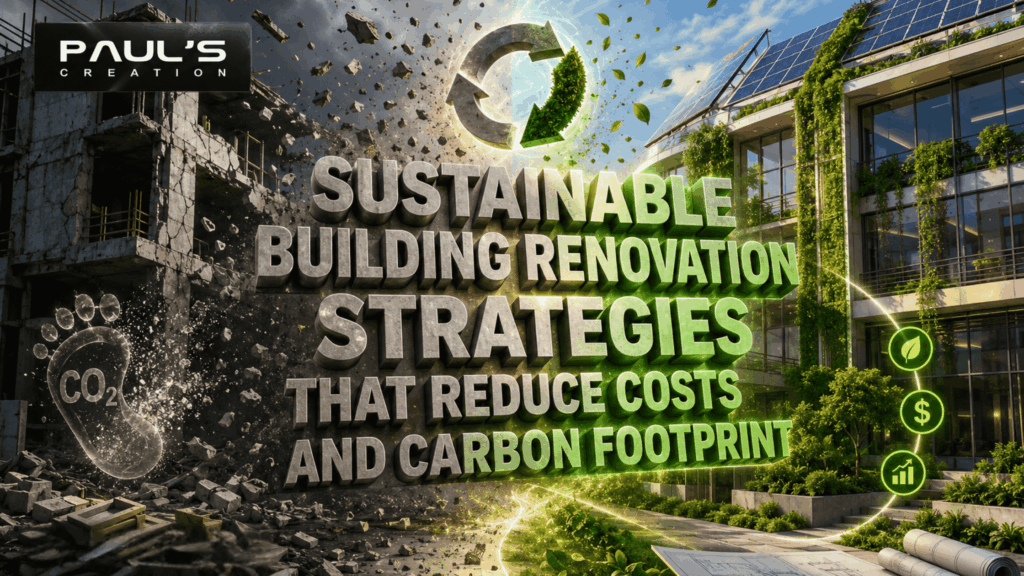
Sustainable renovation is becoming an important part of modern construction as building owners look for ways to reduce energy use and long-term expenses. Older structures often rely on outdated systems that consume more power and generate higher maintenance costs. By applying smarter renovation methods, these buildings can be made more efficient while reducing their environmental impact. Working with top building renovation contractors helps you choose the right strategies that balance cost control, material selection, and long-term sustainability.
- 1. Energy-Efficient Design Planning
One of the most effective strategies for sustainable renovations is improving energy performance at the early planning stages. Buildings lose a significant amount of energy through poor insulation, inefficient layouts, and outdated systems.
Key actions include:
- Upgrade insulation in walls, roofs, and floors
- Installing energy-efficient windows that reduce heat transfer
- Repositioning internal spaces to take advantage of natural daylight
- Reduce dependence on artificial lighting during daytime hours
Energy audits are often the first step in building renovations. This helps identify areas of energy loss and prioritize improvements that deliver long-term savings.
- 2. Use of Recycled and Reclaimed Materials
Reusing materials is a practical way to reduce construction waste and renovation costs. Many materials from old structures can be restored and reused without losing quality.
Common reused materials include:
- Bricks and stones from demolished walls
- Reclaimed wood for flooring or furniture
- Recycled steel for structural support
- Reprocessed glass for windows or partitions
Choosing reclaimed materials reduces demand for new production, thereby lowering carbon emissions associated with manufacturing and transport. Renovation contractors often maintain networks for sourcing recycled materials, which makes it easier to integrate them.
- 3. Efficient Water Management Systems
Water usage is often overlooked during renovations, but it plays a significant role in sustainability. Modern systems reduce waste and lower utility bills.
Some practical approaches include:
- Installing low-flow faucets and shower systems
- Use dual-flush toilet systems
- Setting up rainwater harvesting tanks
- Reusing grey water for gardening or cleaning purposes
These solutions reduce water consumption and decrease the strain on local resources. Over time, property owners will notice a drop in monthly water usage expenses.
- 4. Smart Electrical and Lighting Upgrades
Electrical systems in older buildings are usually not efficient. Renovation offers the chance to replace outdated wiring and lighting with modern, low-energy solutions.
Recommended improvements:
- Switching to LED lighting systems
- Installing motion sensors in low-traffic areas
- Added smart switches and energy monitoring systems
- Upgraded electrical panels for better load distribution
These upgrades reduce electricity consumption significantly. In many cases, property owners working with top building renovation contractors notice that lighting and electrical costs drop soon after renovation completion.
- 5. Sustainable Building Materials Selection
Material choice has a long-term effect on durability and environmental impact. Sustainable materials last longer and require less maintenance.
Common options include:
- Bamboo-based flooring materials
- Low-VOC paints that improve indoor air quality
- Fly ash bricks that reduce cement usage
- Natural stones with long life cycles
Selecting these materials reduces frequent repairs and replacements. It also reduces emissions during the production and transportation phases.
- 6. Waste Reduction During Renovation
Construction waste is a major contributor to environmental pollution. Proper planning can significantly reduce waste generation during renovation work.
Practical waste reduction methods:
- Sorting demolition waste for recycling
- Reusing salvageable fixtures and fittings
- Planning material purchases carefully to avoid excess
- Partnering with recycling facilities for disposal
Renovation contractors work responsibly when handling waste, especially on large-scale projects with lots of material.
- 7. Passive Cooling and Natural Ventilation
Reducing dependence on air conditioning systems is another important step in sustainable renovation. Passive cooling methods are used in building design to maintain comfortable indoor temperatures.
Effective techniques include:
- Installing cross-ventilation windows
- Using shade structures such as overhangs or louvers
- Applying heat-reflective roof coatings
- Designing open airflow pathways inside the building
These methods reduce electricity consumption and create healthier indoor environments without relying heavily on mechanical cooling systems.
- 8. Smart Technology Integration
Modern renovation projects often include smart systems that monitor and control energy use. These technologies provide real-time data and reduce unnecessary consumption.
Examples include:
- Smart thermostats for temperature control
- Energy monitoring apps for tracking usage
- Automated lighting systems based on occupancy
- Remotely-controlled appliances for better management
By using these tools, property owners gain better control over energy consumption and reduce operational costs.
- 9. Long-Term Maintenance Planning
Sustainable renovation is not only about upgrades during construction but also about how the building performs over time. Regular maintenance planning extends materials and systems.
Key practices:
- Scheduled inspections of electrical and plumbing systems
- Cleaning and servicing HVAC units regularly
- Repainting and sealing surfaces to prevent damage
- Monitoring energy usage trends for early issue detection
This approach reduces the need for major repairs and supports consistent performance over the years.
Conclusion:
Sustainable building renovation is not only about upgrading appearances, but also about improving efficiency, lowering operational costs, and reducing environmental impact. From energy-saving systems and recycled materials to smart water and power management, each step contributes to a more responsible way of building improvement. Through proper planning and guidance from top building renovation contractors, property owners can achieve long-term savings and environmental protection.